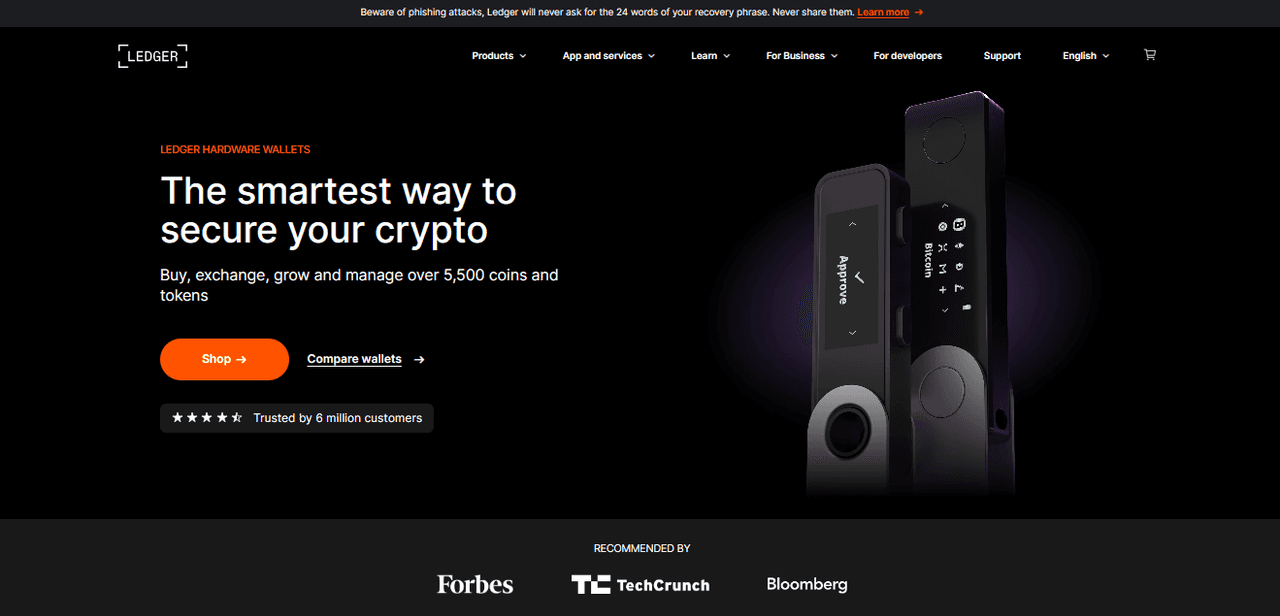
🔐 Ledger Login: Redefining Secure Access in the Crypto Ecosystem 🌍
The cryptocurrency landscape offers unmatched financial freedom—but with that freedom comes responsibility. As hackers grow more sophisticated and phishing schemes become increasingly convincing, relying on outdated login methods is no longer safe. Passwords, email verifications, and two-factor authentication are simply not enough when dealing with digital assets.
This is why Ledger Login has emerged as a revolutionary solution. By combining hardware-level security with cryptographic authentication, Ledger Login gives users complete control over their digital identity while eliminating common attack vectors.
This detailed guide explores Ledger Login from the ground up—what it is, how it works, why it matters, and how it protects your crypto journey in a rapidly evolving Web3 world.
🧠 What Exactly Is Ledger Login?
Ledger Login is a secure authentication method that allows users to access crypto platforms, decentralized applications, and services using a Ledger hardware wallet instead of traditional credentials.
Rather than logging in with:
Email 📧
Username
Password
SMS codes
Ledger Login authenticates users through cryptographic signatures generated inside the hardware wallet itself.
👉 The result? No passwords, no centralized data storage, and no exposure of private keys.
🔑 The Philosophy Behind Ledger Login
Ledger Login is built around three fundamental principles:
🔒 Self-Custody
You own your private keys—not an exchange, not a website, not a third party.
🧩 Decentralization
Authentication does not rely on a central database that can be hacked.
🛡️ Hardware Security
Every login requires physical interaction with your Ledger device.
This approach aligns perfectly with blockchain’s core values: trustless systems and personal sovereignty.
⚙️ How Ledger Login Functions at a Technical Level
Ledger Login uses asymmetric cryptography to verify identity securely.
🔄 Login Process Explained:
A platform requests authentication
A cryptographic challenge is created
The Ledger device signs the challenge internally
The signed response is returned
The platform verifies the signature
Access is granted ✅
🔐 At no stage is the private key revealed, transmitted, or stored online.
🖥️ Ledger Devices That Enable Ledger Login
Ledger Login is supported by modern Ledger hardware wallets, including:
Ledger Nano S Plus
Ledger Nano X
Ledger Stax (where supported)
Each device is powered by a Secure Element chip, designed to withstand physical and digital attacks—even if connected to a compromised computer.
📲 Ledger Login and Ledger Live: A Secure Partnership
Ledger Live is the official application that connects your hardware wallet to the digital world.
🧩 Ledger Live Enables:
Secure device communication
Authentication request handling
Application management
Blockchain interactions
Firmware and security updates
Ledger Login often relies on Ledger Live to act as a trusted bridge between your device and external platforms.
🌐 Using Ledger Login in Web3 Environments
Ledger Login plays a crucial role in Web3 authentication, where users interact directly with decentralized systems.
🚀 Supported Web3 Activities:
Decentralized finance (DeFi) protocols
NFT minting and trading 🎨
DAO voting and governance
Blockchain gaming 🎮
Cross-chain asset management
Every interaction requires on-device approval, ensuring full transparency and protection.
🧑💻 Ledger Login vs Password-Based Authentication
Traditional login systems were never designed for high-value digital assets.
❌ Weaknesses of Password Logins:
Easily phished
Often reused
Stored on centralized servers
Vulnerable to malware
Dependent on third-party security
✅ Strengths of Ledger Login:
No passwords at all
Hardware confirmation required
Immune to database breaches
Resistant to phishing
Zero-trust authentication model
Ledger Login replaces fragile credentials with cryptographic proof of ownership.
🪜 Step-by-Step Guide: How to Use Ledger Login
🟢 Step 1: Prepare Your Ledger Device
Initialize the wallet
Set a strong PIN
Securely store your recovery phrase 📝
🟢 Step 2: Install Ledger Live
Download from the official source
Connect and verify your device
Update firmware if needed
🟢 Step 3: Authenticate with Ledger Login
Visit a supported platform
Choose “Login with Ledger”
Unlock your device
Approve the login request on the device screen
🎉 You’re now logged in securely—without passwords.
⚠️ Common User Errors to Avoid
Even the strongest security system can fail if misused.
🚫 Avoid these mistakes:
Sharing your recovery phrase
Approving transactions without checking details
Connecting to fake Ledger websites
Using unofficial Ledger apps
Leaving your device unattended
Ledger Login protects you—but user awareness is essential.
🧯 Troubleshooting Ledger Login Issues
❓ Device Not Detected
✔ Try another USB cable
✔ Restart Ledger Live
✔ Update device firmware
❓ Login Request Not Appearing
✔ Open the correct blockchain app
✔ Refresh the platform
✔ Reconnect the device
❓ Browser Issues
✔ Use Chrome, Brave, or Edge
✔ Enable hardware access permissions
🔐 Ledger Login and Privacy Protection
Ledger Login does not collect or store personal information.
🕵️ Privacy Benefits:
No email required
No phone number needed
No IP-based tracking
No centralized identity database
Authentication is handled through anonymous cryptographic verification, preserving user privacy.
🏢 Ledger Login for Businesses and Advanced Users
Ledger Login is not just for individuals.
💼 Professional Use Cases:
Crypto investment firms
DAO treasury management
NFT studios
Web3 startups
Blockchain developers
Advanced users can integrate Ledger Login into custom authentication flows, multi-signature systems, and institutional-grade security frameworks.
🔄 Ledger Login vs WalletConnect
While WalletConnect is popular, Ledger Login offers deeper security.
FeatureLedger LoginWalletConnectAuthenticationHardware-basedApp-basedPhishing ResistanceVery HighModeratePrivate Key ExposureNeverDepends on walletConfirmationPhysical deviceApp approval
Ledger Login requires physical possession of the wallet, reducing attack vectors.
🚀 Future Developments of Ledger Login
Ledger Login continues to evolve alongside the crypto ecosystem.
🔮 Expected Enhancements:
Improved mobile authentication 📱
Cross-chain login support
Multi-device authorization
Biometric-assisted verification
Deeper enterprise integrations
Ledger’s long-term vision is to create a universal, secure digital identity for Web3.
❓ Frequently Asked Questions
❓ Is Ledger Login free?
Yes. Ledger Login is included with Ledger hardware wallets.
❓ Can Ledger Login be compromised?
It is extremely resistant to attacks due to hardware isolation and cryptographic design.
❓ Do I need internet access?
Yes, but private keys remain offline at all times.
❓ What if my Ledger is lost?
You can restore access using your recovery phrase on a new device.
🏁 Final Verdict: Why Ledger Login Is a Game-Changer 🏆
As digital assets become more valuable and Web3 adoption accelerates, secure authentication is no longer optional—it’s essential. Ledger Login sets a new benchmark by removing passwords, eliminating centralized vulnerabilities, and putting control back into the hands of users.
Whether you’re managing long-term investments, interacting with DeFi protocols, or building in Web3, Ledger Login offers confidence, security, and peace of mind.